Concrete Driveway Cost
A concrete driveway costs $6 to $12 per square foot installed, and the concrete is 15 to 48 percent of that. This calculator prices the pour, and the rest of the page is about the other three quarters: the base, the forms, the steel, the jointing, the demolition and the pump, plus what actually makes two quotes for the same driveway differ by double.
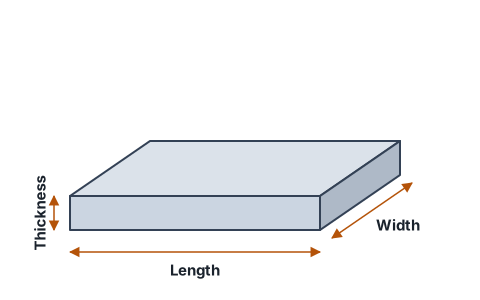
How to use this calculator
- Enter the driveway length, width and thickness.
- Use 4 inches for cars, 5 to 6 inches for trucks, RVs or anything that will be parked loaded.
- Edit the prices. Finishing labor is on by default, which makes it an installed estimate rather than a material one.
- Read the itemized total, and then read the sections below, because the calculator prices the concrete and the finishing and not the six other things on a real invoice.
If you only want the volume, the concrete driveway calculator does cubic yards and bags with a taper option for a sloped drive. If you are still deciding what to pave with, comparison with asphalt, gravel and pavers prices four surfaces side by side over twenty years.
What a concrete driveway costs, and where the figure comes from
Installed, a plain concrete driveway runs about $6 to $12 per square foot, so a 576 square foot two-car driveway is roughly $3,456 to $6,912 and a 1,000 square foot double-length drive is $6,000 to $12,000. That range is cost-aggregator data and we will come back to how much to trust it.
The figure that is properly sourced is the concrete itself. NRMCA's benchmarking survey, covering 174 producers and about a third of all ready-mix delivered in the US, put average revenue at $159.68 per cubic yard on 2023 data. Coverage is 324 divided by the thickness in inches, so at $160 a yard:
| Thickness | Sq ft per cu yd | Concrete $/sq ft |
|---|---|---|
| 4 in | 81 | $1.98 |
| 5 in | 65 | $2.47 |
| 6 in | 54 | $2.96 |
Those are the figures the calculator is prefilled with, as of 2025, and every one of them is editable:
| Item | Default |
|---|---|
| Concrete, material only | $125 / yd³ |
| Concrete, delivered | $160 / yd³ |
| Placing and finishing labor | $2 to $8 per sq ft |
So on a $6 to $12 driveway the concrete is somewhere between a sixth and a third of the bill. We built one up from sourced unit prices and the concrete came out at 15 to 48 percent, 24 percent at the midpoint. Everything below is about the other three quarters, because that is where two quotes for the same driveway diverge.
One thing to retire straight away: a price map by state. A county bid tabulation from March 2025 shows the same 4,000 psi mix bid at $190.50, $193.50, $205.00 and $315.00 per cubic yard in four quadrants of one county in one month. The driver is haul distance from the batch plant. The same is true of the base course: one bidder quoted the same limestone at $12.10 a ton from one plant and $19.10 from the other, 58 percent apart on distance alone. The concrete cost calculator covers delivery, short load fees and standby time in detail.
Where the money actually goes
Here is a 576 square foot driveway built up from published unit prices rather than from a per square foot average. Ranges are wide on purpose: the low column is an easy site with chute access and no demolition, the high column is a driveway behind a house on poor soil.
| Item | Low | High |
|---|---|---|
| Concrete, 7.11 cu yd delivered | $1,138 | $2,240 |
| Crushed stone base, 4 in, 13.2 tons | $159 | $329 |
| Excavation, 14.2 cu yd | $123 | $498 |
| Spoil, spread on site or hauled away | $14 | $569 |
| Forms and stakes | $120 | $300 |
| Reinforcement: fiber, mesh or a #4 mat | $75 | $1,601 |
| Sawcut control joints, 96 to 192 linear ft | $312 | $624 |
| Placing and finishing labor | $1,152 | $4,608 |
| Concrete pump, if the truck cannot reach | $0 | $1,221 |
| Demolishing and disposing of an existing driveway | $0 | $4,890 |
| Permit, and a bond if the apron is included | $30 | $260 |
Every row there except two is computed from a published unit price: the concrete from the county bid range, the base from a county material bid at 1.85 tons per cubic yard, excavation and spoil from state DOT and county rates, reinforcement and sawcutting from published installed rates, labor from the range in the calculator, and demolition from DOT removal line items plus a real landfill tipping fee. The two exceptions are forms and winter protection, for which we could find no published unit price at all, so the forms row is an estimate and cold-weather protection is not in the table.
Two lines are worth staring at, because they are zero on one quote and four figures on another: the pump and the demolition. Neither appears in a per square foot average, and either one can be the whole difference between two bids.
Nobody specifies a residential driveway. Really.
This is the most surprising thing we found and it explains why quotes vary so much: there is no code and no standard that governs a residential concrete driveway.
- The IRC exempts driveways not more than 30 inches above adjacent grade from needing a permit, and Chapter 4 is scoped to the foundation and foundation spaces for buildings. No thickness, strength, reinforcement, jointing or base requirement exists.
- ACI's site paving guide, the document everybody cites, is now titled Commercial Concrete Parking Lots and Site Paving. The 2001 edition did name driveways twice; we could not read the 2021 body, which is paywalled, so we cannot tell you whether it still does.
- ACI's residential concrete code scopes itself to "footings; foundation walls; slabs-on-ground". Exterior flatwork is out.
The nearest thing to a code number is IRC Table R402.2, which specifies 3,500 psi and 5 to 7 percent total air for "porches, carport slabs and steps exposed to the weather, and garage floor slabs" in a freeze-thaw climate. That is a list of everything a driveway is, except a driveway. Our concrete PSI guide covers what each strength is for.
Practically: 4 inches for cars, 5 to 6 where a truck or an RV parks, 3,500 psi in a freezing climate with air entrainment, 3,000 where it never freezes. The slab thickness guide has the load side, and air entrainment is worth insisting on because a hand-batched or non-air mix cannot resist freeze-thaw however strong it is.
The base, and how much of it you are actually paying for
The industry's position on base is less enthusiastic than most quotes imply. An ACPA and PCA publication on light-traffic pavement says a subbase "may not be required" where the subgrade is prepared, and warns that "it is not economical to use an overdesigned subbase system for the sole purpose of increasing the composite k-value." The ACI site paving guide agrees. The base is there to give a uniform surface to build on and to drain, not to carry the slab.
Two specifics worth knowing when a quote says compacted base:
- Compaction is to 95 percent of standard Proctor, not modified. Both documents say so explicitly. Modified Proctor is a heavier standard and a different price; most municipal handouts specify no percentage at all, and one we read demands 100 percent standard.
- A driveway gets no vapor barrier. NRMCA is direct about it: "Vapor retarders are generally not necessary when placing exterior slabs on grade." If one is on the quote, ask what it is for.
To price it: in-place dense-graded base is 1.85 tons per cubic yard by Wisconsin DOT specification, and crushed stone averaged $18.50 a metric ton FOB plant in the USGS Mineral Commodity Summaries, which is $16.78 a short ton before haulage. Four inches under 576 square feet is about 13 tons. The gravel calculator and the crushed concrete calculator work the tonnage by material.
Reinforcement: what it does and does not buy
The ACI site paving guide is unusually blunt. Distributed steel "will not add to the load-carrying capacity of the pavement and should not be used in anticipation of poor construction practices." Steel in a driveway controls crack width after a crack forms. It does not let you pour thinner and it does not stop cracking.
Priced, the three options are not close:
| Option | Installed $/sq ft | On 576 sq ft |
|---|---|---|
| Microsynthetic fiber in the mix | $0.13 | $75 |
| 6x6 W1.4 welded wire mesh | $0.51 | $294 |
| #4 bar mat at 18 in on center | $2.45 to $2.78 | $1,411 to $1,601 |
Mesh is the default on residential quotes and it is the weakest of the three on paper: 6x6 W1.4 provides 0.028 square inches of steel per foot against the 0.0864 that the usual shrinkage and temperature benchmark asks for on a 4 inch slab, which is 32 percent. It also has to stay in the upper third of the slab to do anything, and mesh walked flat onto the subgrade does nothing at all. Our rebar calculator covers spacing, laps, and where the steel has to sit.
There is an end-of-life cost to steel that nobody mentions at the quote stage: one county landfill takes clean concrete free but only without rebar, and reinforced removal carries a $1 to $3 per square foot surcharge. That is covered on the driveway resurfacing and replacement page.
Jointing, where the authorities disagree and it costs you money
Control joints are the actual crack control mechanism, and there is no single spacing rule. Four sources, four answers, for a 4 inch driveway:
| Source | Rule | Spacing at 4 in |
|---|---|---|
| ACI site paving guide | 30 times the thickness | 10 ft |
| ACPA | 24 times the thickness, 15 ft maximum | 8 ft |
| A state ready-mix association | 10 ft or less | 10 ft |
| One Minnesota city | 5 ft in any direction | 5 ft |
That last one is not a rounding difference. On a 20 by 30 foot driveway the 5 foot rule needs 2.7 times the linear feet of joint the ACI rule does, which at a published sawcutting rate of $3.25 a linear foot is about $390 more on one driveway. If you are in a jurisdiction with a prescriptive joint rule, that is a real line item.
Joint depth is the one thing everybody agrees on: a quarter of the slab thickness, or 1 inch with early-entry sawing. The panel shape rule is contested too, and we are not averaging it: NRMCA says a panel should be no more than 1.5 times longer than it is wide, and the ACI site paving guide says "not more than 25 percent greater than its width", which is 1.25 times. Use the tighter one and you get more joints.
Real driveway sizes, and the yards each one takes
The aggregators cannot agree what a two-car driveway is: 400, 576 and 640 square feet across three of them, a 60 percent spread that swamps any argument about dollars per square foot. So work from your own dimensions. Published municipal figures put driveway width between 10 feet minimum and 24 feet maximum across the five jurisdictions we read, with one state DOT calling 12 feet standard, and garage doors run 8 to 9 feet single and 16 feet double.
| Driveway | Size | Area | 4 in | 5 in | 6 in |
|---|---|---|---|---|---|
| Single, short | 10 by 20 ft | 200 sq ft | 2.5 cu yd | 3.1 cu yd | 3.7 cu yd |
| Single, typical | 12 by 40 ft | 480 sq ft | 5.9 cu yd | 7.4 cu yd | 8.9 cu yd |
| Two-car | 24 by 24 ft | 576 sq ft | 7.1 cu yd | 8.9 cu yd | 10.7 cu yd |
| Two-car, long | 20 by 40 ft | 800 sq ft | 9.9 cu yd | 12.3 cu yd | 14.8 cu yd |
| Three-car | 30 by 30 ft | 900 sq ft | 11.1 cu yd | 13.9 cu yd | 16.7 cu yd |
| RV pad | 12 by 40 ft at 6 in | 480 sq ft | 5.9 cu yd | 7.4 cu yd | 8.9 cu yd |
Note the RV row: the reason it costs more than a single driveway of the same footprint is entirely thickness. Six inches instead of four is 50 percent more concrete and a heavier base. No published standard sets an RV pad dimension, so those figures are built from RV garage door widths rather than quoted from a specification.
Finishes, and why the premium is not the material
A broom finish is the baseline and it is what almost every driveway gets. The interesting thing about the alternatives is that the material adds very little and the premium is nearly all labor and risk. Priced from the manufacturers' own coverage rates:
| Finish | Material $/sq ft | Typical quoted premium |
|---|---|---|
| Broom | None | Baseline |
| Exposed aggregate, surface retarder | $0.13 to $0.20 | $2 to $6 |
| Integral color, pigment in the mix | $0.20 to $0.27 | $2 to $6 |
| Dry shake color hardener | $0.15 to $0.40 | $2 to $6 |
| Stamped | Mats are reusable | $8 to $20 all in |
So when a contractor quotes $4 a square foot more for exposed aggregate, about 4 percent of that is the retarder. The rest is real: exposed aggregate is a two-visit job, because the retarder has a removal window of 4 to 16 hours, and then it needs a pressure wash with the slurry captured rather than sent down the storm drain. Color has its own risk, which is that it cannot be matched later: a fifth of an ounce of calcium carbonate per square yard shifts the shade visibly.
For a stamped driveway, stamped concrete cost has the tiers and the sealing cycle it commits you to. One aggregator data point worth flagging as wrong: Angi's finish table prices broom, exposed aggregate, colored and polished concrete at the identical $8 to $12 per square foot, which is a zero premium for color and exposed aggregate and cannot be right.
Why two quotes for the same driveway differ by double
Access, and specifically the pump. A published pumping rate sheet charges a $1,200 minimum for four hours plus $3.00 a cubic yard, then $250 an hour, $100 per extra setup and $60 per 10 feet of extra pipe. On a 576 square foot pour that is about $1,221 of pump against $1,138 of delivered concrete, which is to say the pump can cost more than the concrete, so $2.12 a square foot of pure access cost. On a 200 square foot single drive the four hour minimum alone is $6.00 a square foot. If one bidder can back a truck to the forms and the other cannot, that is your whole price difference and it has nothing to do with quality.
Short loads and waiting time. Below the truck minimum, usually 3 to 6 cubic yards, there is a surcharge of $50 to $175 a load. You get roughly five minutes of unloading per cubic yard free and pay by the minute after: two suppliers in different states both publish $2.00 a minute, so a crew that is not ready when the truck arrives is burning $120 an hour. How much a truck holds covers the thresholds.
Winter. Cold weather protection is a real cost that is invisible in summer quotes. One municipality's requirements, citing ACI guidance, are 50 degrees Fahrenheit maintained for 72 hours, no calcium chloride accelerator, double insulating blankets, and no pour when the average temperature is below 20 degrees. We could not find a published price for blankets and heating, so if you are pouring in February, ask for it as a separate line.
Drainage, if it needs it. A trench drain is a $3,000 to $5,000 decision, not a $500 one: published per-foot prices start at $139 a foot for the cheapest 6 inch HDPE channel, so 20 feet is $2,780 in material before the catch basin at about $1,600. Aggregator figures of $500 to $2,000 for drainage are below the material cost.
The apron, which you may not be allowed to build. The strip in the public right of way is specified by the city and is often thicker and stronger than your part. Two municipalities we read take opposite positions on reinforcing it, one banning wire mesh outright and the other requiring 7 inches of concrete with epoxy-coated #4 bar. The barrier is not the permit, it is the bond: one village charges a $100 permit and requires a $20,000 surety for right-of-way work. The driveway apron guide covers who is responsible for it.
Replacing rather than pouring new
Replacement is the new pour plus two things: breaking out the old slab and getting rid of it. Published DOT prices for removing concrete pavement run $0.62 to $6.00 per square foot, and as always the quantity drives the unit price, since one state paid $1.17 a square foot on 201,999 square yards while another paid $6.00 on 256.
Disposal then swings on whether there is steel in it. One county landfill takes clean concrete at no fee but only without rebar; another charges $23 a ton plus a $25 a ton surcharge for concrete of 3,500 psi or greater, which is a fee for the concrete having been good; a third charges $103 a ton and limits self-haul to one cubic yard a trip. On a 576 square foot driveway, about 14 tons, that is $0, $320 or $1,434.
Before you price a replacement, check whether you need one. Driveway resurfacing cost works through resurface, overlay, lift or replace with the thickness limits and the condition each option actually requires.
Concrete against asphalt, gravel and pavers
The same 576 square foot driveway this page prices, set beside the three surfaces people weigh against it. One naming note first, because it trips up every search: blacktop and asphalt are the same material under two names. Nothing below distinguishes them.
| Surface | Installed | Upkeep over 20 years | 20 year total |
|---|---|---|---|
| Gravel | $864 to $2,880 | $1,382 | $2,246 to $4,262 |
| Asphalt or blacktop | $2,880 to $5,760 | $4,666 | $7,546 to $10,426 |
| Concrete | $3,456 to $6,912 | $576 | $4,032 to $7,488 |
| Pavers | $5,760 to $14,400 | $576 | $6,336 to $14,976 |
Asphalt starts 17 percent cheaper than concrete and finishes about half again as expensive at the midpoint of each range, or 39 percent dearer comparing the two high ends and 87 percent comparing the two low ends. The whole reversal is one line item: sealcoating. At the interval the sealcoating industry recommends, six applications over twenty years on 576 square feet comes to about $4,666, which is more than the low end of installing the driveway in the first place. Take sealcoating out and asphalt wins on every horizon. That single input is the argument, so the rest of this section is about whether it is a real cost.
Gravel is the cheapest surface on every horizon and it is not close. What gravel costs is attention: it needs topping up and regrading every year, forever, and two of the municipalities we looked at prohibit it outright.
Lifespan: what the agencies say, against what the industry says
"Concrete lasts twice as long as asphalt" is the load-bearing claim in every comparison online. It is an industry and aggregator claim, not an agency one. We went to the state DOT pavement design manuals, because designing pavement life is literally their job:
- NCDOT's design procedure sets 30 years for flexible and 30 years for rigid. Identical.
- Caltrans Highway Design Manual Chapter 610, Topic 612 requires a 40 year minimum design life for new mainline pavement regardless of type, with no separate table for asphalt and concrete.
What the agencies do publish is the maintenance schedule, and that is where the real difference lives. NCDOT's 45 year life-cycle cost analysis schedules mill and replace for asphalt at years 12 and 23, against joint maintenance for concrete at year 17. Asphalt does not fail sooner; it gets rebuilt sooner. That is a better sentence than any lifespan ratio and you can check it.
The trade associations, predictably, disagree with each other, and we are reporting both rather than picking: the American Concrete Pavement Association and the National Asphalt Pavement Association each publish figures favoring their own material. The aggregators go further than either: Angi states concrete lasts 50 to 100 years and gravel 100 years, against HomeGuide's 30 to 40 for concrete. Angi's figure exceeds every primary source we found, including the concrete industry's own.
Sealcoating, the line item that decides the answer
Nobody independent has shown that driveway sealcoating extends pavement life. We looked hard. FHWA's pavement preservation guidance, HIF-10-020, covers road treatments only and says so; the closest analogue in it, fog seal, got 4 to 5 years of extension across 6 projects, and crack sealing's measured extension starts at zero. The one study we found that tested asphalt pavement sealers directly, Tennessee DOT Research Report RES2013-10, May 2017, found a seven times spread between commercial products and concluded that "future research is needed to validate the laboratory results in the field." Every source claiming a life extension was a sealcoating contractor or a sealer manufacturer.
The Asphalt Institute itself is notably cool about it. Its FAQ says a well-built driveway "should not require sealing for approximately 2 to 5 years." That is the material's own trade body declining to recommend the cycle its customers are sold.
Then the arithmetic. At Angi's $1.25 to $1.50 per square foot on a three year cycle, 576 square feet resealed six times in twenty years is $4,320 to $5,184. At Angi's other figure from the same day, $2 to $7, it is $6,912 to $24,192. HomeGuide puts installing the asphalt driveway at $2,000 to $7,200. On every one of those combinations the sealing costs more than the driveway.
Two honest caveats. Sealcoating does do something visible: it restores the black color and fills surface voids, and an unsealed driveway grays and ravels. Whether that is worth thousands over twenty years is a judgment, not a fact, and it is yours. Second, coal tar sealers are banned in a number of US jurisdictions over polycyclic aromatic hydrocarbon runoff, so check locally before budgeting for the cheap product.
Concrete's equivalent is sealing with a silane or siloxane, and it has a better evidence base in one narrow way. NRMCA's Concrete in Practice sheet 2 recommends one, which is the strongest non-manufacturer endorsement available. On interval, the two to three years you will be quoted comes from a sealer manufacturer, while independent field data on bridge decks found no silane sealer failed before 12 years, and by 18 years close to half had failed. Published cost estimates for concrete sealing span thirty times, from $0.10 to $3.00 per square foot, so use your own quote. Our sealing guide covers the product side.
Gravel: cheapest to build, and never finished
Gravel wins the cost comparison on every horizon, so the case against it has to be made on other grounds, and it can be.
It disappears. PennDOT's Local Technical Assistance Program information sheet 186 reports that untreated gravel roads "lose up to 1 inch of surface per year... approximately 500 tons of materials per mile." Scaled to a 576 square foot driveway that is about 3.3 tons a year, or $43 to $165 of stone, and that is an upper bound because a driveway sees nothing like a road's traffic. What no source publishes is the regrading interval: we checked PennDOT, the South Dakota LTAP Gravel Roads Manual and an NRCS technical note, and none of them states one for a residential driveway. Our gravel calculator gives the tons for any depth.
It may not be allowed. Two ordinances we read prohibit it in plain language: Countryside, Illinois section 7-2-7 and Cuyahoga Heights, Ohio section 1026.05, the second of which also bans tar and chip and codifies that 2 inches of concrete is worth 4 inches of gravel base. Check your own ordinance before pricing gravel, because a hard-surface requirement removes the option entirely.
And it may not even save you the stormwater fee. Cities that bill by impervious area sometimes count gravel as impervious: Wheaton, Illinois' ordinance names "Gravel, brick, and stone areas" explicitly. Lawrence, Kansas bills $10.71 a month per 2,800 square foot equivalent unit, which works out at about $0.046 per square foot a year, so 576 square feet costs roughly $26 a year forever whatever it is made of.
So which surface
The data supports a narrower set of statements than the internet does, so here they are.
If you will sealcoat asphalt on the recommended cycle, concrete is cheaper to own and it is not marginal. If you will not sealcoat, asphalt is cheaper on every horizon, and nobody independent has shown that skipping it shortens the pavement's life. Decide which of those two people you are before you compare quotes, because that decision is worth more than the difference between any two bids.
Gravel is the cheap answer if your ordinance allows it and you own a rake. The cost is annual attention rather than dollars.
Pavers cost two to four times concrete and the case for them is not durability, it is that you can lift and relay them. A settled area is repairable without a saw. Against that, their material is about half the installed price, which is the highest ratio of the four, and the vehicular base requirement specified by the Interlocking Concrete Pavement Institute is the part most quotes skimp.
Once you have chosen concrete, the calculator at the top of this page itemizes it down to base, forms, reinforcement and finish, and the concrete cost calculator covers delivery, short load fees and standby time on any pour. For a thicker section carrying an RV or a truck, the slab thickness guide has the load side.
How to read a quote against the yards
You can sanity-check any driveway quote in two minutes with the calculator above and one division.
- Work out the cubic yards. Length times width times thickness in feet, divided by 27.
- Multiply by $160 to $200 a yard delivered. That is the concrete.
- Divide the quote by the area to get its dollars per square foot, and compare it with $6 to $12.
- Then ask what is missing. Does it include demolition and disposal? A pump? The apron? Sawcut joints or tooled ones? Reinforcement, and which of the three? Is the mix air entrained? Winter protection if it will be poured cold?
A quote that is well below the range usually differs in one of those, not in skill. A quote well above it usually has a pump or a demolition in it that the cheap one has quietly left out.
One last thing about upkeep, because it is the largest number nobody puts in a driveway budget. At the two year resealing cycle you will be recommended, and at $0.91 to $3.00 a square foot, a 576 square foot driveway costs $524 to $1,728 every two years, which is $5,242 to $17,280 over twenty years on a driveway that cost $3,456 to $8,640. Independent field data on silane sealers found none failing before 12 years, which suggests the two year cycle is a product of who is recommending it. We put the evidence for and against sealing on the comparison below, alongside the finding that plain rock salt does not chemically attack concrete while the ice melters sold as gentler on it do.
Frequently asked questions
Does concrete really last twice as long as asphalt?
Not according to the agencies that design pavement. NCDOT sets 30 years for both flexible and rigid, and Caltrans requires a 40 year minimum for new mainline pavement regardless of type. What differs is the maintenance schedule: NCDOT plans mill and replace for asphalt at years 12 and 23 against joint maintenance for concrete at year 17.
Do I have to sealcoat an asphalt driveway?
No authority requires it, and we could not find field evidence that it extends pavement life. The one study that tested asphalt sealers directly, Tennessee DOT RES2013-10, found a seven times spread between products and said field validation was still needed. The Asphalt Institute itself says a well-built driveway should not need sealing for two to five years.
Why is a paver driveway so much more expensive?
Partly the units and partly what goes under them. ICPI specifies 6 to 8 inches of base for a residential driveway against 4 to 6 for a walkway, and 80 mm units for vehicular use against 60 mm. On 576 square feet the paver assembly needs about 26 tons of aggregate, more than a gravel driveway uses as its whole surface.
Is a gravel driveway allowed?
Not everywhere. Two ordinances we read prohibit it outright, one of which also bans tar and chip. Some cities also count gravel as impervious for stormwater billing, so it does not necessarily avoid that fee either. Check your local ordinance before pricing it.
How much does a concrete driveway cost?
About $6 to $12 per square foot installed, so $3,456 to $6,912 on a 576 square foot two-car driveway. The part that is properly sourced is the concrete: NRMCA puts average ready-mix revenue at $159.68 a cubic yard, which at 4 inches is $1.98 per square foot. So the concrete is 15 to 48 percent of the bill, 24 percent at the midpoint, and everything else is base, excavation, forms, steel, jointing and labor.
How much does a 2-car concrete driveway cost?
Work from your own dimensions, because the cost guides cannot agree what a two-car driveway is: 400, 576 and 640 square feet across three of them, a 60 percent spread. At 24 by 24 feet, which is 576 square feet, it takes 7.11 cubic yards at 4 inches and runs roughly $3,456 to $6,912 installed.
How thick should a concrete driveway be?
Four inches for cars, 5 to 6 inches where a truck or an RV parks. There is no code answer: the IRC sets no thickness for a residential driveway and ACI's site paving guide is titled for commercial parking lots. The nearest code figure is IRC Table R402.2, which asks for 3,500 psi and 5 to 7 percent air for porches, carport slabs and garage floors, a list of everything a driveway is except a driveway.
Why do two quotes for the same driveway differ by double?
Usually one line item the cheap quote left out. A concrete pump, needed when the truck cannot reach the forms, is about $1,221 on a 576 square foot pour at a published rate sheet, which is more than the concrete costs. Demolishing and disposing of an existing driveway is up to $4,890 on the same area. Neither is in anybody's per square foot average.
Does a concrete driveway need rebar?
Not by code, and ACI's site paving guide is blunt about what it buys: distributed steel "will not add to the load-carrying capacity of the pavement and should not be used in anticipation of poor construction practices." Installed, fiber is about $0.13 a square foot, welded wire mesh $0.51, and a #4 bar mat $2.45 to $2.78. Mesh is the usual choice and provides 32 percent of the steel the common benchmark asks for.
How far apart should the joints be?
There is no single rule, which costs real money. For a 4 inch driveway ACI gives 30 times the thickness, so 10 feet; ACPA gives 24 times, so 8 feet; and one Minnesota city prescribes 5 feet in any direction. On a 20 by 30 foot driveway that last rule needs 2.7 times the linear feet of joint, about $390 more in sawcutting.
Do I need a permit for a driveway?
Usually not for the private part: the IRC exempts driveways not more than 30 inches above adjacent grade. The apron in the public right of way is different and is specified by the city. The barrier there is not the fee, which ranged from $30 to $260 across the counties we looked at, but the bond: one village charges a $100 permit and requires a $20,000 surety for right-of-way work.
What does an exposed aggregate or colored finish add?
Expect $2 to $6 per square foot more than a broom finish, and almost none of it is material. Surface retarder is $0.13 to $0.20 a square foot at the manufacturer's published coverage and integral pigment $0.20 to $0.27. The premium is labor: exposed aggregate is a two-visit job with a 4 to 16 hour removal window and a pressure wash with the slurry captured.
Is a concrete driveway cheaper than asphalt?
Not to install, by roughly 17 percent. Over twenty years it is cheaper by about a third, and the whole reversal is asphalt sealcoating on the recommended cycle. Our driveway material comparison prices concrete, asphalt, gravel and pavers side by side and covers the evidence on whether sealcoating does anything.