Concrete Weight Calculator
This concrete weight calculator returns the weight of a pour in pounds, US tons and kilograms. Pick a shape or enter a volume you already know, then set the density to match your mix. It answers how much a yard of concrete weighs, what a slab puts on a floor per square foot, and whether a load is inside your trailer or truck rating.
How to use this calculator
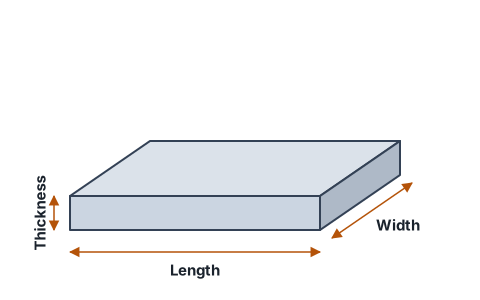
- Pick the shape. Rectangular covers slabs, footings and walls. Round covers patio pads and tank bases. Column covers piers and sonotubes. The fourth option takes a volume straight from a batch ticket or another calculator, so you do not have to re-enter dimensions.
- Enter the dimensions, or the volume if that is what you have.
- Set the density. Leave it at 150 for reinforced normal-weight concrete. Use 145 for plain concrete, or 90 to 135 for a lightweight mix. The section below explains which number belongs in that field and why the answer moves as much as 25 percent.
- Read the weight in pounds, tons and kilograms, along with the dead load per square foot for flatwork.
If you need the volume rather than the weight, use the concrete yardage calculator or the slab calculator, then bring the cubic yards back here.
The formula
Weight is volume multiplied by density. There is nothing more to it, and the only hard part is choosing the density:
Weight (lb) = Volume (ft³) × Density (lb/ft³)
A cubic yard is 27 cubic feet, so a cubic yard at 150 pounds per cubic foot is 27 × 150 = 4,050 pounds, which is 2.03 US tons or 1,837 kilograms.
Worked example. A 9 by 9 foot slab at 4 inches thick is 9 × 9 × 0.333 = 27 cubic feet, exactly one cubic yard. At 150 lb/ft³ that is 4,050 pounds. Set the density to 110 for a lightweight mix and the same slab is 2,970 pounds, 1,080 pounds lighter. That is why the density field is not decoration.
Unit weight and density: which number to use
"Unit weight" and "density" mean the same thing in US practice: pounds per cubic foot. The number you have probably seen is 150, and it is worth knowing where it comes from, because it is a design figure rather than a measurement.
ASCE 7's table of minimum densities for design loads gives 144 lb/ft³ for plain stone concrete and 150 lb/ft³ for reinforced stone concrete. The same pair appears verbatim in state building code, for example the Massachusetts State Building Code 780 CMR unit design dead load tables, which also list plain cinder concrete at 108 and reinforced cinder at 111.
AASHTO and FHWA's bridge design guidance take a slightly different pair: normal-weight concrete at 145 lb/ft³ for strengths up to 5 ksi, and then the sentence that explains the whole 145-versus-150 argument, that "the unit weight of reinforced concrete is generally taken as 0.005 KCF greater than the unit weight of plain concrete." Five pounds per cubic foot, for the steel. 145 plus 5 is 150.
So the two figures are not rivals. 150 is 144 or 145 with the reinforcement already added. That has a practical consequence covered further down: if you use 150 and then add your rebar weight on top, you have counted the steel twice.
Measured density is a separate question from design density. NRMCA puts normal-weight concrete at 140 to 150 lb/ft³, and the Portland Cement Association's Design and Control of Concrete Mixtures gives the same 140 to 150 band. Real batch tickets can run above it: NRMCA's own worked example on yield discrepancies uses a measured 151.0 lb/ft³, which is 4,077 pounds per cubic yard.
| Class | lb per ft³ | lb per cu yd | Where it comes from |
|---|---|---|---|
| Insulating, non-load-bearing (perlite, vermiculite) | 25 to 50 | 675 to 1,350 | ASCE 7 and 780 CMR dead load tables |
| Lightweight, load-bearing (other light aggregate) | 70 to 105 | 1,890 to 2,835 | ASCE 7 and 780 CMR dead load tables |
| Structural lightweight, in place | 90 to 115 | 2,430 to 3,105 | NRMCA CIP 36 |
| Lightweight concrete, code definition | 90 to 135 | 2,430 to 3,645 | ACI 318-19 section 2.3, equilibrium density |
| Normal weight, measured | 140 to 150 | 3,780 to 4,050 | NRMCA CIP 36 and PCA |
| Normal weight, plain, for design | 144 to 145 | 3,888 to 3,915 | ASCE 7 (144), AASHTO and FHWA (145) |
| Normal weight, reinforced, for design | 150 | 4,050 | ASCE 7, 780 CMR, AASHTO |
| Heavyweight, radiation shielding | 190 to 260 | 5,130 to 7,020 | National Precast Concrete Association |
One correction worth making. Plenty of pages state that ACI defines lightweight concrete as 90 to 115 lb/ft³. That was ACI 318-14. ACI 318-19 changed the definition to 90 to 135 lb/ft³, closing the undefined gap between 115 and 135 that the previous edition left open. NRMCA's 90 to 115 is still a fair description of what structural lightweight concrete actually weighs in place; it is just no longer the code definition.
A second one: ACI does not define normal-weight concrete as 150 lb/ft³ anywhere. ACI 318-14's normal-weight band is 135 to 160, and the code's own modulus of elasticity shortcut is internally consistent only with 145. The code gives Ec = 57,000√f'c for normal-weight concrete, and 33 × 1451.5 = 57,619, which rounds to 57,000. At 150 lb/ft³ the same expression gives 60,625, which is not the code equation. ACI's working normal-weight density is 145.
Weight per cubic foot and per cubic yard
These are the two numbers people come looking for, so here they are directly.
| Density | 1 cubic foot | 1 cubic yard | US tons per cu yd | kg per cu yd |
|---|---|---|---|---|
| 90 lb/ft³ (lightest structural lightweight) | 90 lb | 2,430 lb | 1.22 | 1,102 |
| 110 lb/ft³ (typical lightweight) | 110 lb | 2,970 lb | 1.49 | 1,347 |
| 135 lb/ft³ (top of the lightweight definition) | 135 lb | 3,645 lb | 1.82 | 1,653 |
| 144 lb/ft³ (ASCE plain) | 144 lb | 3,888 lb | 1.94 | 1,764 |
| 145 lb/ft³ (AASHTO plain) | 145 lb | 3,915 lb | 1.96 | 1,776 |
| 150 lb/ft³ (reinforced, the usual answer) | 150 lb | 4,050 lb | 2.03 | 1,837 |
| 151 lb/ft³ (NRMCA measured example) | 151 lb | 4,077 lb | 2.04 | 1,849 |
The "4,000 pounds per yard" figure you see everywhere is a rounding, not a standard. The honest range for normal-weight concrete is about 3,888 to 4,077 pounds per cubic yard depending on which density you are entitled to use, and it is worth 200 pounds a yard on a big pour. The per-yard question, including what a full truck can legally haul and why suppliers short-load, is covered in the hauling section below.
A 5 gallon bucket of concrete, and how many make a yard
This is the question people actually type, and it has a clean answer because a gallon is a defined volume. One cubic foot is 7.48 US gallons, so 5 gallons is 0.668 cubic feet. Multiply by the density and you have the weight:
| Container | Volume | At 144 lb/ft³ | At 150 lb/ft³ |
|---|---|---|---|
| 1 gallon | 0.134 ft³ | 19.3 lb | 20.1 lb |
| 2 gallons | 0.267 ft³ | 38.5 lb | 40.1 lb |
| 5 gallon bucket | 0.668 ft³ | 96.2 lb | 100.3 lb |
| 1 cubic foot | 7.48 gal | 144 lb | 150 lb |
So a 5 gallon bucket filled with concrete is about 100 pounds. That is the number worth carrying around in your head, because it is right at the limit of what one person should be lifting, and a bucket looks far smaller than 100 pounds feels. Two of them is a quarter of a ton.
Working the other way, a cubic yard is 40.4 buckets, since 27 cubic feet divided by 0.668 is 40.4. That is a useful sanity check on any job someone is planning to mix and carry by hand: 40 trips with 100 pounds in each hand-carried bucket is not a job, it is an injury.
The bag comparison is the most useful part. Quikrete's 80 pound bag yields about 0.60 cubic feet, which is 4.49 gallons, or 90 percent of a 5 gallon bucket. So one 80 pound bag very nearly fills one bucket, and the mixed result weighs about 100 pounds rather than 80, because you added water. A 60 pound bag is 3.37 gallons and a 40 pound bag is 2.24, so you can mix two 40s in one bucket and still have room to turn the paddle.
Two caveats on the bucket itself. A bucket sold as 5 gallons usually holds a little more than that to the brim, so these figures are for 5 gallons of concrete rather than a bucket filled to the rim. And the figures are the concrete only: a standard plastic pail adds roughly 2 pounds, which is inside the rounding here but worth knowing if you are weighing samples.
Weight per square foot, by slab thickness
For flatwork the question is usually not the total but the load per square foot, because that is what a floor, a deck or a trailer bed is rated for. The arithmetic is thickness in inches divided by 12, times the density.
Building code publishes this directly, and it matches. 780 CMR Table 120.T-1 gives concrete slabs per inch of thickness as 12.5 psf for reinforced stone concrete, 12 psf for plain stone concrete, 9.5 psf for reinforced lightweight sand concrete and 8.5 psf for plain lightweight. Twelve and a half pounds per inch is exactly 150 divided by 12, so the code figure and the calculation are the same thing.
| Thickness | Reinforced, 150 lb/ft³ | Plain, 144 lb/ft³ | Lightweight, 110 lb/ft³ |
|---|---|---|---|
| 2 in | 25.0 psf | 24.0 psf | 18.3 psf |
| 3 in | 37.5 psf | 36.0 psf | 27.5 psf |
| 3-1/2 in | 43.8 psf | 42.0 psf | 32.1 psf |
| 4 in | 50.0 psf | 48.0 psf | 36.7 psf |
| 5 in | 62.5 psf | 60.0 psf | 45.8 psf |
| 6 in | 75.0 psf | 72.0 psf | 55.0 psf |
| 8 in | 100.0 psf | 96.0 psf | 73.3 psf |
| 10 in | 125.0 psf | 120.0 psf | 91.7 psf |
| 12 in | 150.0 psf | 144.0 psf | 110.0 psf |
A useful memory hook: a 4 inch slab weighs 50 pounds per square foot, and every inch after that adds 12.5. A 3-1/2 inch slab, which is the residential slab-on-ground minimum, comes in at 43.8 psf.
This is where a lot of deck and second-floor projects come unstuck. A 4 inch topping slab at 50 psf is by itself more than the 40 psf residential live load a floor is typically designed for, before any furniture. If you are putting concrete over a framed floor, the framing has to be designed for it rather than checked afterwards.
Wet versus cured weight
Concrete does get lighter as it dries, but far less than the internet suggests, and for normal-weight concrete the difference does not change any practical answer.
Curing cannot remove mass. What happens to the mix water is that some of it is chemically consumed into the hardened solid and stays there permanently, some is physically held in the gel and capillary structure, and only the remainder can evaporate. NIST's measurement of non-evaporable water in hydrated cement puts the chemically bound fraction at 0.235 pounds of water per pound of cement at complete hydration, with roughly another 0.15 pounds per pound of cement locked into the gel structure.
Put numbers on it. A typical six-sack mix has about 560 pounds of cement and 300 pounds of water per cubic yard. At 0.235 pounds of water per pound of cement, 132 pounds of that water is chemically bound and never leaves, which is 44 percent of the mix water. Another 84 pounds sits in the gel and stays put at ordinary indoor humidity. That leaves about 84 pounds per cubic yard, or roughly 3 lb/ft³, as the realistic loss. A slab placed at 150 lb/ft³ settles at about 147.
That figure lines up with the industry measurements. NRMCA TIP 9 puts equilibrium density about 3.0 lb/ft³ above oven-dry density, and CIP 36 puts equilibrium density 3 to 8 lb/ft³ below fresh density. Our 3 lb/ft³ sits at the bottom of that band, which is where normal-weight concrete belongs.
For structural lightweight concrete it does matter. The aggregate itself holds water, so the drop is at the top of that 3 to 8 lb/ft³ range. The Expanded Shale, Clay and Slate Institute's worked example goes from a fresh density of 118.1 lb/ft³ to an equilibrium density of 110.6, a loss of 7.5 lb/ft³ or 6.4 percent, and it takes 60 to 90 days to get there. That is exactly why ACI 318 and ASTM C567 make you design lightweight concrete on equilibrium density rather than fresh density.
Short version. For normal-weight concrete, use one density and ignore the wet-versus-cured question: the difference is about 2 percent, or 84 pounds on a 4,050 pound yard. For lightweight concrete, ask your supplier for the equilibrium density, not the fresh density.
What the reinforcement adds, and the mistake to avoid
Rebar is denser than concrete, so steel adds weight. It adds less than most people expect, and the common error is adding it twice.
Nominal bar weights are fixed by ASTM A615 and published in every DOT's bridge details, for example Caltrans Bridge Design Details Chapter 13:
| Bar | Diameter | Area | Weight per foot |
|---|---|---|---|
| #3 | 0.375 in | 0.11 in² | 0.376 lb |
| #4 | 0.500 in | 0.20 in² | 0.668 lb |
| #5 | 0.625 in | 0.31 in² | 1.043 lb |
| #6 | 0.750 in | 0.44 in² | 1.502 lb |
| #7 | 0.875 in | 0.60 in² | 2.044 lb |
| #8 | 1.000 in | 0.79 in² | 2.670 lb |
Welded wire mesh weighs far less. The Wire Reinforcement Institute's table of common styles puts 6x6 W1.4/W1.4, the sheet still widely called 10/10 gauge, at 21 pounds per 100 square feet, which is 0.21 psf.
Now the arithmetic. Take #4 bar at 18 inches on center both ways in a 4 inch slab. One direction needs 1 divided by 1.5 = 0.667 linear feet of bar per square foot, so both ways is 1.333 linear feet. At 0.668 pounds per foot that is 0.891 pounds of steel per square foot, against 50 pounds of concrete. The steel is 1.8 percent of the slab. Tighten it to 12 inches on center and it is 2.7 percent. Use mesh instead and it is 0.4 percent.
Do not count the steel twice. 150 lb/ft³ is already 144 or 145 plus about 5 lb/ft³ for reinforcement, as FHWA states outright. If you calculate a slab at 150 and then add your rebar tonnage on top, you have double counted. Either use 150 and stop, or use 145 and add the steel you actually specified, which the rebar calculator will weigh for you. The calculator above says which case you are in as soon as you change the density field.
Hauling, trailers and truck limits
Weight is usually a transport question rather than a structural one, and this is where the numbers bite.
A cubic yard at 4,050 pounds is more than most homeowner trailers are rated for. Half a yard of concrete is 2,025 pounds, and a yard of broken-out slab you are hauling away is in the same ballpark. Two cubic yards is 8,100 pounds, which is a commercial dump trailer.
Ready-mix trucks are constrained the same way. NRMCA puts mixer capacity at 8 to 12 cubic yards and a loaded truck at roughly 80,000 pounds. But drum capacity is not what the truck can legally carry. Federal limits under 23 U.S.C. 127, published in FHWA's bridge formula weights, are 20,000 pounds on a single axle, 34,000 on a tandem and 80,000 gross, and the bridge formula itself usually binds before the gross cap because a mixer's axles sit close together.
The Portland Cement Association's analysis of truck weights makes the consequence concrete: on a three-axle ready-mix truck with a 48,000 pound federal maximum, "only 18,000 lbs. (out of a potential 40,000 lbs.) is productive payload; 30,000 lbs. is the tare weight of the truck." Divide 18,000 by 4,050 and that truck can legally haul about 4.4 cubic yards. PCA goes further and states that federal weight laws "effectively force fully-loaded ready mixed concrete trucks off the Interstate Highway System." This is the real reason your supplier sends two trucks for a nine yard pour and charges a short load fee, and many states cut mixer payload further with seasonal load restrictions during spring thaw. There is more on capacity and scheduling in how much concrete fits in a truck.
Breaking out a slab: tonnage, and what a dumpster will actually take
Demolition is where weight bites hardest, because disposal is priced by the ton and hauling is capped by the ton. Work the slab area at 12.5 pounds per square foot per inch of thickness, which is the reinforced stone concrete line in the 780 CMR dead load table and the same 150 lb/ft³ divided by 12 used throughout this page. A 4 inch slab is 50 pounds per square foot.
Here is the part nobody puts in one place. The dumpster rental industry publishes weight limits, and the concrete industry publishes densities, and the two have never been set side by side. Budget Dumpster publishes 1 to 2 tons for a 10 yard container, 2 to 3 for a 20, 3 to 4 for a 30 and 4 to 5 for a 40, with an absolute ceiling regardless of size: "The maximum weight limit for each roll off container is 10 tons. If your dumpster weighs more than this, our driver cannot safely haul it away." Hometown Dumpster Rental puts a 10 yard container's limit slightly higher, at "4,000-6,000 lbs, or 2-3 tons."
Now put real slabs against those numbers:
| Slab | Area | Weight | Tons | What that means |
|---|---|---|---|---|
| 10 x 10 pad, 4 in | 100 ft² | 5,000 lb | 2.5 | Already over a 10 yard limit |
| 12 x 20 patio, 4 in | 240 ft² | 12,000 lb | 6.0 | Over a 40 yard standard limit |
| 20 x 20 garage, 4 in | 400 ft² | 20,000 lb | 10.0 | Exactly the 10 ton hauling ceiling |
| 10 x 50 driveway, 5 in | 500 ft² | 31,250 lb | 15.6 | Cannot go in one container of any size |
Read that table before you book anything, because the conclusion is counterintuitive: with concrete, the container size barely matters. The smallest slab in the table, a 10 by 10 pad, already exceeds the published limit on the smallest container. A single-car garage slab hits the absolute 10 ton hauling ceiling on the nose, so no roll-off of any size takes it legally. And a modest driveway at 15.6 tons needs two containers however big the one you rented is. Budget Dumpster states the mechanism plainly: heavy debris "can quickly exceed your dumpster's weight limit even if your container is only partially full." You will be paying overage on air.
Which is why concrete is usually not a dumpster job at all. The alternatives, in rough order of how much they cost:
- A dedicated clean-concrete container. Rental firms that handle construction and demolition debris run heavy containers for clean concrete, typically 10 yard units because the weight fills them before the volume does. Clean means concrete only: no rebar protruding, no dirt, no wood, no trash. Mixed loads get priced as mixed debris, which costs more.
- Hauling it to a recycler yourself. Clean concrete is a feedstock rather than waste, so a recycling yard's tipping fee is normally well below a landfill's, and some take clean material free. Watch your own vehicle rating rather than the volume: a cubic yard of rubble is over two tons and will exceed a half-ton pickup's payload several times over.
- Not breaking it out. If the slab has settled rather than failed, slab lifting is usually far cheaper than demolition precisely because nothing has to be hauled anywhere.
Two corrections to the arithmetic above, both of which push the number up. Broken rubble occupies substantially more volume than the intact slab did, because of the voids between pieces, so a container that would have held the slab as a solid block will not hold it as rubble. And a driveway or garage slab usually sits on a compacted aggregate base that comes out with it, which is additional tonnage the slab arithmetic does not include. If you are pricing the replacement at the same time, the crushed concrete calculator handles the rubble side, since broken concrete has its own density and it is not 150 lb/ft³.
Bagged concrete: dry weight against placed weight
Bag weight and placed density are two different things, and the gap between them causes a recurring confusion.
Quikrete's concrete mix data sheet gives yields of about 0.30 cubic feet for a 40 pound bag, 0.375 for 50 pounds, 0.45 for 60 pounds and 0.60 for 80 pounds. Sakrete publishes the same 0.30, 0.45 and 0.60 for its high-strength mix.
Divide 80 pounds by 0.60 cubic feet and you get 133 lb/ft³, which looks like a lightweight mix. It is not. That is the dry material. Add the water the bag tells you to add, 6 to 9 pints for an 80 pound Quikrete bag, and the placed concrete lands at 144 to 149 lb/ft³, which is ordinary normal-weight concrete. Every bag size implies the same 133 lb/ft³ dry density, and the same 3,600 pounds of dry material per cubic yard, whether you buy 45 eighty-pound bags or 90 forty-pound bags.
Which means a cubic yard of bagged concrete is 3,600 pounds of bags to carry, in 45 to 90 trips. The bag calculator works out how many you need.
Concrete block weight is a different calculation
If you are here for the weight of a concrete block or cinder block rather than a pour, the density of the concrete is only half the answer: a hollow block is roughly 50 to 60 percent solid, so its weight depends on its net volume as well as its mix.
ASTM C90 sorts units into three density classes, and the same nominal 8x8x16 block ranges from about 28 pounds at the lightweight end to 43 pounds at the heavy end. We have the full chart by size and class, with what the retailers actually list, on the concrete block weight page. To count blocks for a wall rather than weigh them, use the concrete block calculator.
Frequently asked questions
How much does a yard of concrete weigh?
A cubic yard of reinforced normal-weight concrete weighs about 4,050 pounds, just over 2 US tons, at the design density of 150 lb per cubic foot. Plain concrete at 144 to 145 lb per cubic foot works out to 3,888 to 3,915 pounds a yard.
What is the unit weight of concrete?
Design codes use 144 to 145 lb per cubic foot for plain normal-weight concrete and 150 lb per cubic foot for reinforced, the difference being about 5 lb per cubic foot of steel. Measured density runs 140 to 150 lb per cubic foot per NRMCA.
How much does a cubic foot of concrete weigh?
About 150 pounds per cubic foot for reinforced normal-weight concrete and 145 for plain. Lightweight concrete is defined by ACI 318-19 as 90 to 135 lb per cubic foot, so set the density field to match your mix.
How much does a concrete slab weigh per square foot?
A 4 inch slab weighs 50 pounds per square foot, and every extra inch adds 12.5. That matches the 12.5 psf per inch that building code publishes for reinforced stone concrete slabs.
Does concrete weigh more wet or dry?
Wet, but only by about 2 percent for normal-weight concrete, roughly 84 pounds on a 4,050 pound yard. Most of the mix water is chemically bound into the hardened concrete and never leaves. The difference matters for lightweight concrete, where it runs 3 to 8 lb per cubic foot.
Should I add rebar weight on top of the concrete weight?
Not if you used 150 lb per cubic foot, because that figure already includes about 5 lb per cubic foot for reinforcement. Either use 150 and stop, or use 145 and add the steel you specified. Rebar in a typical residential slab adds only 0.4 to 2.7 percent.
How much does a 5 gallon bucket of concrete weigh?
About 100 pounds. Five US gallons is 0.668 cubic feet, and at 150 lb/ft³ that is 100.3 pounds of concrete, or about 96 pounds at a plain 144 lb/ft³. A cubic yard is 40.4 buckets. One 80 pound bag of concrete mix yields about 0.60 cubic feet, which is 4.49 gallons, so a single bag very nearly fills one bucket and weighs about 100 pounds once you have added the water.
Will a concrete slab fit in a dumpster?
Usually not the way people expect, because concrete reaches the weight limit long before the volume limit. Published limits run 1 to 2 tons for a 10 yard container up to 4 to 5 tons for a 40 yard, with an absolute hauling ceiling of 10 tons for any roll-off. A 10 by 10 pad at 4 inches is already 2.5 tons, a 20 by 20 garage slab is 10 tons exactly, and a 10 by 50 driveway at 5 inches is 15.6 tons and cannot go in one container of any size. Concrete usually needs a dedicated clean-concrete container or a trip to a recycler.
How much can a concrete truck legally carry?
Far less than its drum holds. Per PCA, a three-axle mixer with a 48,000 pound federal maximum has only 18,000 pounds of payload against a 30,000 pound tare weight, which is about 4.4 cubic yards. Drum capacity is 8 to 12 yards, so short loads and split deliveries are a legal constraint, not a supplier preference.
How much does a yard of bagged concrete weigh?
3,600 pounds of dry material, whichever bag size you buy: 45 bags at 80 pounds, 60 at 60 pounds, or 90 at 40 pounds all come to the same 1.8 tons. Add the mix water and the placed concrete lands at 144 to 149 pounds per cubic foot.
How much does a concrete slab weigh for disposal?
A 4 inch slab weighs 50 pounds per square foot, so a 20 by 20 foot garage slab is 20,000 pounds, or 10 tons. Broken rubble takes up more volume than the intact slab, so size the container on the tonnage rather than the dimensions.