Concrete Slab Foundation
A concrete slab foundation, or slab-on-grade, is concrete poured directly on the ground that serves as both the foundation and the ground floor, with no crawl space or basement below. Its edges are thickened or carried on footings that take the wall loads into the soil. Whether a slab works, and which kind, comes down to the soil and how deep the ground freezes.
What's in a slab foundation
- Slab
- At least 3-1/2 in thick
- Footing
- Sized from code tables for load and soil, below the frost line
- Base
- 4 in of sand, gravel or crushed stone
- Vapor retarder
- 6 mil polyethylene, laps of 6 in or more
The slab, base and vapor retarder minimums are from section R506 of the International Residential Code, as adopted in the 2020 Indiana Residential Code. The base course can be skipped on certain well-drained soils, and garages, utility buildings and unheated accessory structures don't need the vapor retarder. Your local code and engineer set the real numbers.
Size the base with the gravel calculator. Under-slab insulation covers where rigid foam goes, and the concrete slab guide covers patios, pads and shed floors.
The three kinds of slab foundation
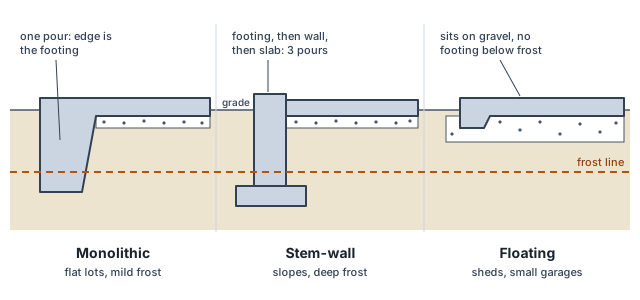
Monolithic slab
The footing and floor go down in one pour, with the perimeter thickened into the footing. One pour means less labor and no joint between footing and floor, so it suits level lots in mild climates. The forms and grade have to be right before the truck arrives.
Stem-wall slab
The footing is poured first, a short wall is built on it, then the slab is poured inside. Three steps instead of one, but the wall can be any height, so it handles slopes and deep frost and lifts the floor above grade. Size the wall with the concrete wall calculator.
Floating slab
A slab on compacted gravel with no footing tied in, often with a slightly thickened edge. It moves with the ground, so it isn't for a heated house where the ground freezes. It's the usual choice for sheds and detached garages that are exempt from frost protection.
That exemption comes from section 403 of the International Residential Code. As the Town of Orchard Park, NY summarizes it, freestanding structures "in excess of 600 square feet and/ or over 10 feet tall at the eave must meet frost protection requirements." Smaller and lower ones don't. Bigger or taller, and it needs footings below the frost line like the house. A shed slab usually qualifies.
Post-tensioned slabs
Post-tensioning is a way of reinforcing a slab, not another shape. The slab is cast around steel tendons in sleeves, which are pulled tight once the concrete has gained strength, leaving the slab in compression. The Post-Tensioning Institute says these slabs address "problems associated with ground-supported residential foundations on shrink-swell soils" and that "less concrete and steel are needed for the same structural capacity." They're designed to PTI's DC10.5 standard.
Never drill or cut a post-tensioned slab blind. The tendons are under high tension. Structural engineer Bryan Allred's STRUCTURE article on existing PT foundations notes these slabs are marked to "caution future contractors against drilling into the concrete without accounting for the existing tendons." Get the tendons located before adding a drain, a door or an anchor.
For conventional rebar or mesh, use the rebar calculator.
The soil decides the foundation
The enemy is expansive clay, which swells when wet and shrinks when dry. The Colorado Geological Survey says these soils "can expand up to 20% by volume when exposed to water" and can exert up to 30,000 pounds per square foot. They don't lift a slab evenly, and that's what cracks it.
It's a widespread problem. A 2023 paper in HUD's journal Cityscape, citing the American Society of Civil Engineers, says "one in every four residences in the continental United States has experienced disturbances by expansive soils," with yearly damage "surpassing $15 billion."
On expansive clay, the choice is a slab engineered for the soil (often post-tensioned) or a slab that moves. Get a soils report before anyone quotes a foundation. Soil also sets the bearing capacity behind footing width, which the footing calculator covers, and good drainage away from the perimeter cuts down the wet and dry cycles that drive the movement.
Frost depth and frost-protected shallow foundations
Water in soil expands as it freezes, so a footing above the frost line gets pushed up every winter. The usual fix is to put the footing below the local frost depth, which in cold regions means a deep dig and is why slabs are more common in warm climates.
The alternative is a frost-protected shallow foundation (FPSF): rigid insulation down the slab edge and out in a horizontal wing keeps the ground under the footing from freezing. A 1994 HUD and NAHB Research Center report on frost-protected shallow foundations says this allows "foundation depths as shallow as 16 inches" in the most severe U.S. climates.
The catch: the International Residential Code allows an FPSF only in buildings kept at a monthly mean temperature of at least 64°F, as Montana's energy code newsletter explains. An unheated garage usually gets ordinary footings below the frost line unless it's small enough for the accessory building exemption, so ask your building department. Where an unheated slab adjoins an FPSF, the code carries the insulation between the two and under the unheated slab.
Slab vs crawl space vs basement
| Type | Good at | Trade-off |
|---|---|---|
| Slab-on-grade | Least digging, no floor framing to rot, no crawl space to trap moisture | Plumbing is cast in, so repairs mean cutting concrete |
| Crawl space | Room to run and service plumbing and wiring, handles sloped lots | Moisture and pests if it isn't sealed |
| Basement | The most usable space and easy access to systems | The most excavation and wall |
These are general trade-offs; your soil, site and local prices decide. Where frost forces a deep footing anyway, digging further for a basement can add a whole floor for the extra depth. For prices, see concrete foundation cost.
Where slab foundations work best
A slab is the simplest foundation on a flat lot with stable, well-drained soil and shallow frost. Take those away and the design changes: a slope pushes you to a stem wall, expansive clay to post-tensioning or an engineered slab, and deep frost to an FPSF or a footing below the frost line.
As a general rule, the number of stories doesn't rule out a slab. The slab, footings and reinforcement are designed for the loads above, so a two-story house changes the design rather than the foundation type. Soil and frost depth decide whether a slab works.
To estimate the concrete, run the floor through the concrete slab calculator and add the thickened edges and footings separately. Slab thickness covers how thick to pour, and how to pour a concrete slab covers forming to finishing, including the vapor barrier.
Frequently asked questions
What is a concrete slab foundation?
A slab-on-grade: concrete poured directly on the ground that acts as both the foundation and the ground floor, with no basement or crawl space below. The edges are thickened or carried on footings that take the wall loads into the soil.
What is the difference between a monolithic, stem-wall and floating slab?
A monolithic slab pours the thickened perimeter footing and the floor in one go. A stem-wall slab pours a footing first, builds a short wall on it, then pours the floor inside, which suits slopes and deep frost. A floating slab sits on compacted gravel with no footing tied in, which suits sheds and detached garages that are exempt from frost protection.
How thick is a slab foundation?
The International Residential Code sets the floor slab at no less than 3-1/2 inches, on a 4 inch base of sand, gravel or crushed stone where one is required. Footings are sized from the code tables for the load and soil, and go below the frost line unless the foundation is frost protected or exempt. An engineer or your local code may require more.
What is a post-tensioned slab?
A slab cast around steel tendons that are pulled tight after the concrete gains strength, which keeps it in compression. The Post-Tensioning Institute describes it as the answer to residential foundations on shrink-swell soils, and it needs less concrete and steel for the same capacity. Have the tendons located before drilling or cutting into one.
Does a garage slab need footings below the frost line?
Under the International Residential Code, a freestanding accessory building of 600 square feet or less with an eave no taller than 10 feet is exempt from frost protection. Larger or taller ones need it. The code's frost-protected shallow foundation method is for buildings kept at 64°F or warmer, so an unheated garage usually gets footings below the frost line. Check with your building department.
Can you build a two story house on a slab foundation?
Yes. The slab, footings and reinforcement are designed for the loads above, so a second story changes the design rather than the foundation type. Soil and frost depth decide whether a slab works, not the number of floors.